
If you are deciding between the EcoFlow R600 and the R600 Pro, you are really picking between portability and runtime. Both share the same general power output and fast charging, but the Pro packs a much bigger battery. In the real world that means fewer trips to the wall or the car to recharge and more hours of steady power when the grid is down.
From using these in outages and on weekend trips, our rule of thumb is simple: if you mostly charge phones, run a laptop, a CPAP, lights, and maybe a small fridge for a few hours, the R600 is enough and easier to carry. If you want to keep a fridge cold all day, run tools longer, or stretch through an overnight outage without babysitting, the R600 Pro is the safer bet.
Where people get tripped up is surge power and continuous loads. Both units can start many small appliances, but neither is a whole-house solution. Think in terms of essentials, not everything at once.
Do this first: write down your must-run items and their watts, then multiply by the hours you need. If any device has a high startup surge, note that too. Ten minutes with this list will make the choice obvious.
Quick Comparison
We will give you clear buy recommendations by use case, show you the meaningful spec differences, and explain how those numbers translate into run time, charging behavior, heat, and noise in real life.
The quick verdict: who should buy which
Buy the R600 if you want light, grab-and-go power
- Best for: car camping, day trips, powering a CPAP overnight in a tent, remote work setups, short outages where you prioritize phones, Wi-Fi, and a few lights.
- Why: same inverter class as the Pro, much easier to carry, still charges very fast on AC, and pairs well with a small folding solar panel for top-ups.
- Limitation to accept: smaller battery means you will recharge more often if you run a fridge or anything over 100 watts for long stretches.
Buy the R600 Pro if you need longer runtime on the same outlets
- Best for: keeping a mid-size fridge cold during an extended outage, longer boondocking weekends, basic RV loads, portable job site tools in short bursts.
- Why: larger battery capacity with the same easy app controls and fast AC charging, so you get more hours per cycle without a bigger learning curve.
- Limitation to accept: it is heavier and bulkier to move, and solar input is still the bottleneck on cloudy days.
Skip both if your plan is whole-home backup or heavy A/C
- If you need to run a central air conditioner, electric heaters, a well pump for hours, or a high-draw microwave frequently, you will outgrow this class. Look at higher-capacity stations or a traditional inverter generator paired with a transfer switch.
At-a-glance comparison highlights
What actually changes between R600 and R600 Pro
- Battery capacity and runtime: the Pro carries a much larger battery, which directly translates to longer hours on the same loads.
- Size and weight: the Pro is notably heavier. Plan for two-hand carries or a fixed spot in an RV or garage.
- Expansion path: the Pro often supports pairing with an extra battery or a second unit in certain configurations. The base model is more limited.
What stays the same and why it matters
- Inverter class: both target the same 600 watt continuous output with higher short surges, which dictates what you can plug in.
- Fast AC charging: both refill quickly from the wall, which is a big deal during rolling outages or quick turnarounds between trips.
- Solar and car charging behavior: both accept modest solar input and standard 12 volt car charging. Expect similar charge times in the field.
- App and usability: same interface and core features, so the learning curve does not change if you upgrade.
The decision in one line
- If you carry it often and run light to moderate loads, pick the R600. If you park it and need longer runtimes on the same outlets, pick the R600 Pro.
When you are deciding between EcoFlow’s compact R600 and the larger R600 Pro, it really comes down to how long you need to run essentials without a recharge and how much weight you want to carry. Both share the same control layout, fast wall charging, and a friendly app. The Pro gives you a much bigger fuel tank and the option to expand later. The standard R600 keeps costs and weight down for shorter trips and lighter loads.

Charge on the go with a 1.5m 12/24V car-to-XT60i cable – 10A fuse, heat-resistant, works with EcoFlow, Anker, Bluetti & more. Check fit for your power station.
$21.99 on Amazon
Price and availability are accurate as of 03/19/2026 01:04 am GMT and are subject to change.
The R600’s smaller body makes it the one we actually take to the picnic table, on quick work calls at the park, or to top off camera batteries in the field. It rides along without taking over your cargo space and is easy to carry with one hand.
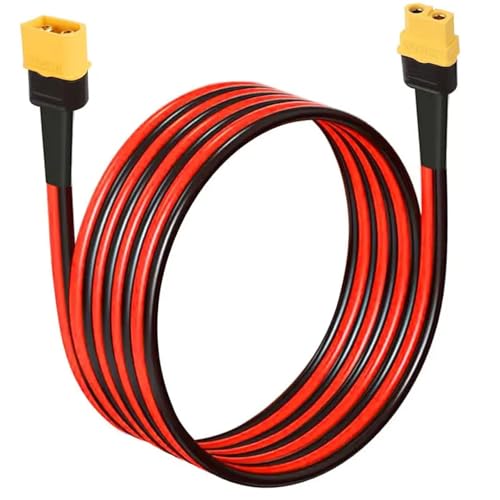
XT60 extension makes solar and RC hookups plug-and-play. 12AWG tinned copper keeps losses low and current stable. 5 ft reach, 300V rated—great for panels, packs, drones.
$46.68 on Amazon
Price and availability are accurate as of 03/19/2026 01:05 am GMT and are subject to change.
The R600 Pro is better as a basecamp unit. It is still movable, but most folks will set it where power is needed and leave it there, like near a fridge during an outage or next to a camper galley.
Size and portability
If you plan to carry your power station often, size matters more than people think. The R600 is compact enough to stash under a desk or in a small gear bin. It is an easy grab-and-go unit for tailgates, parks, or a quick overnight. The R600 Pro is a step up in footprint and weight. It is still portable with a single handle, but you will feel it when you move it in and out of a trunk or up stairs. For small apartments and frequent transport, the standard R600 is friendlier. For home backup or an RV where it mostly sits, the Pro’s extra heft is worth it.
Battery and charging
Real-world use comes down to energy in and energy out. The R600 Pro holds a lot more energy than the R600, so it runs the same devices for significantly longer. If you want to cover a night of fridge duty or a couple of CPAP nights without thinking about it, the Pro’s extra capacity pays off. If your loads are light and you can recharge daily, the standard R600 is enough.
Both models shine on wall charging. EcoFlow’s fast AC charging gets you from low to mostly full in about the time it takes to eat dinner. This is a big deal during rolling outages or when you duck into a coffee shop or community center to top up. They both accept solar and car charging as well, so you can trickle in energy while you use them.
The R600 Pro also supports an extra battery module that stacks capacity for longer outages or full weekend trips without babying your loads. If you are unsure how much you will need over time, that expansion path is a nice safety net.
If you care about budget now and do not want to mess with add-ons, the R600 keeps it simple. If you want room to grow, the R600 Pro is the one to build around. You can check current availability here: 12AWG XT60 male-to-female extension cable (5 ft) for ALLPOWERS R600/R1500/R2000, EcoFlow River/Delta, and Anker solar generators for the Pro and TAIFU XT60i 12V/24V Car Charger Cable for Anker SOLIX, EcoFlow River/Delta, Bluetti, and DJI Power Stations for the standard model.
Inverter performance and surge handling
Both units provide clean, pure sine-wave AC power that is safe for laptops, TVs, and sensitive electronics. They sit in the same general inverter class for continuous output. EcoFlow’s boost feature helps start some higher-draw appliances within reason, especially simple heating elements and certain tools. It is still wise to avoid pairing either model with heavy, long-running resistive loads like full-size space heaters or big air conditioners. Those are better served by larger, higher-wattage stations or a traditional fuel generator.
Where people run into trouble is stacking too many mid-sized loads at once. A coffee maker plus a toaster plus a hair dryer will exceed what these mid-size inverters are designed for. One heavy appliance at a time is the safer play.
Ports and usability
EcoFlow keeps controls consistent. You get a clear display with input, output, and time-to-empty estimates that react quickly. There are multiple AC outlets, a 12V car port, and several USB options for phones, tablets, and laptops. The layout is straightforward, and the display is readable indoors or out.
On the R600, we like the balance of AC and USB ports for light-duty setups. It acts like a central charging hub at a campsite without feeling overbuilt.
On the R600 Pro, the same layout just runs longer. You plug in the same devices and do not need to babysit the battery meter as often, which is the main reason to step up.
Noise and thermal behavior
Both units use active cooling. The fans ramp up during fast wall charging and also when the inverter is pushed near its limits. Under light loads, they are quiet. Under high load or during rapid charging, you will hear the fans. Give them a few inches of space on all sides so they can breathe. Heat buildup shortens lifespan on any lithium pack, so treating ventilation as a must-have is smart.
App and controls
The EcoFlow app connects over Bluetooth or Wi-Fi and mirrors the front display. You can:
- See live input and output
- Adjust charging rates to keep fan noise down
- Toggle boost features
- Update firmware
Setup is quick and the app is the same across both models, which makes upgrading or adding a second unit easier.
The verdict: which should you buy?
If you mainly need to charge phones, run a laptop, power a router, and maybe make a pot of coffee, the EcoFlow R600 is the smarter, lighter, and cheaper choice. If you need to keep a fridge cold overnight, run a CPAP for multiple nights, or want headroom for an outage, the EcoFlow R600 Pro is the safer bet and has room to grow with an extra battery.
Clear picks by persona:
- Home outage prepper: R600 Pro. Longer runtimes and the option to add more capacity later reduce stress when the grid is flaky.
- Weekend camper and tailgater: R600. Easy to carry, fast to recharge, and plenty for lights, phones, speakers, and a small cook appliance one at a time.
- Vanlife or RV traveler with solar: R600 Pro. Better daily buffer for cloudy days and fridge duty, with solar keeping it topped up between drives.
FAQ
Buying decisions
Q: R600 or R600 Pro for short outages at home?
A: Pick the R600 Pro if you want to keep a fridge cycling plus Wi-Fi and phones going through the night. The Pro’s larger battery gives about 2 to 3 times the runtime of the R600. The base R600 is fine for lights, a router, phones, and a CPAP with the humidifier off.
Q: Can either unit run a small microwave or portable A/C?
A: Not reliably. Both have a 600W inverter. EcoFlow’s boost mode can sometimes run lighter resistive loads, but most microwaves and portable A/C units pull 900 to 1500W or more. Expect tripping or poor performance. If you need to run those, you need a higher-wattage power station.
Setup and compatibility
Q: Are these compatible with third-party solar panels?
A: Yes, with the right adapter. Both accept panels from other brands using an MC4 to EcoFlow adapter. Check panel open-circuit voltage and current limits in the manual, match polarity, and keep panels in good sun. Two 100W panels are a common match if you stay within the voltage limit.
Care, safety, and troubleshooting
Q: Can I use R600 or R600 Pro as a UPS for a desktop PC?
A: They support pass-through charging with a short transfer time. That works for routers and small electronics. Some desktop PCs may reboot during switchover. If you need zero-transfer performance, use a dedicated UPS. Test your setup before you count on it.
If you mostly want a grab-and-go power source for camping, tailgates, or quick storm coverage, the EcoFlow R600 is the right call. It is lighter, easier to stash, and fast to recharge. It handles phones, laptops, cameras, LED lights, a router, and short cycles on a compact fridge without feeling like overkill.
If your goal is longer outages, a full-size fridge running steadily, or more devices at once, step up to the R600 Pro. The extra capacity is the difference between limping through an evening and making it through the night with fewer compromises. It is heavier, but it buys you real breathing room when the power stays off.
Where people get tripped up is assuming both models will run the same appliances for the same length of time. They share similar output behavior, but the Pro’s bigger battery carries you further. If you foresee anything beyond light-duty use, you will be happier with the Pro.
Bottom line: light loads and mobility first, go R600. Outage stamina and fewer battery anxiety moments, go R600 Pro.
Final takeaways: pick the right R600 model
Choose R600 if
- You want a compact, everyday power station for camping, beach days, and quick home interruptions.
- Your loads are light: phones, tablets, laptops, camera batteries, Wi-Fi, lights, and a CPAP without the humidifier.
- You have frequent access to wall power and value the quickest turnaround on a small pack.
- You plan to pair it with a modest solar panel for daytime top-offs, not full-time off-grid living.
Pick R600 Pro if
- You want dependable fridge coverage during longer outages and more time between charges.
- You power multiple items at once: fridge, lights, networking gear, plus device charging.
- You expect to charge from solar more often and want better day-to-day resilience.
- You prefer fewer compromises and a wider safety margin when surge loads kick in.
When you should skip both
- You need to run a microwave for real cooking sessions, a space heater, a portable AC, or a well pump. Look at a larger 1 to 2 kWh station with higher surge handling.
- You require 30 amp RV service or whole-home backup. That is a job for a larger power station or a traditional generator with a transfer switch.
Action plan and next steps
Pre-buy checklist
- List your must-run items and their watts: fridge, CPAP, router, lighting, laptops, phone chargers.
- Add realistic run-time targets: two to four hours vs overnight. Capacity drives this decision.
- Decide how you will recharge: wall, car, or solar. If solar, note your roof or yard space and panel wattage.
- Check your surge loads: fridge startups and small appliances can spike. Plan a margin.
- Be honest about weight and storage: will you carry it often or mostly park it at home.
- Consider future needs: if your goal is expanding capability, the Pro gives you more headroom.
Learn more and compare alternatives
If you are still on the fence about EcoFlow R600 vs R600 Pro, scan our in-depth notes in this R600 Pro review and our broader EcoFlow R600 comparison to see how your exact loads map to real run time. For larger setups or RV use, browse our Solar Generators hub for panel pairings and our Best Portable Generators category for gas and dual-fuel options. If you just want the short list, our Reviews section has head-to-head picks by budget and use case.
Two quick caveats before you buy:
- CPAP users: running the humidifier can double or triple draw. Test with the humidifier off first to validate your overnight goal.
- Fridges vary a lot. Older or deep freezers often surge harder and run longer. If your food security hinges on it, size up or plan for daytime solar.
Make the choice that matches your real life, not a spec sheet. If your loads are light and mobility matters, the R600 is enough. If you want to relax during longer outages and stop micromanaging battery bars, the R600 Pro pays you back every time the lights go out.