
If you camp, RV, or live with unreliable power, a solar cooker is a quiet way to make hot meals without hauling fuel. In good sun you can bake bread, simmer chili, sterilize water, or roast veggies while your generator stays off. No noise. No fumes. Just food.
Most people think solar ovens are slow and finicky. The reality is simple. In clear mid‑day sun, the better models reach 300 to 400 F and cook like a low to medium oven. Evacuated tube cookers heat fast and hold heat well. Box and panel ovens handle bigger pots and baking projects. None of them like dense clouds or deep shade, and winter angles slow everything down.
This guide is for campers who want fuel‑free lunches, RVers who want to save propane on long trips, and off‑grid households who want a backup way to cook during outages or burn bans. We narrowed the field to portable units that pack up easily, set up fast, and can take a beating in the field.
What matters most is not the marketing wattage. It is how quickly a cooker reaches temperature, how well it holds heat in light wind, how much food fits, and how often you have to adjust it to track the sun. We judged picks on portability and weight, capacity and pan size, real max temperature, setup time, insulation in shoulder seasons, durability, and useful accessories like pots and carry cases.
Quick Comparison
Quick micro‑step before you buy or cook: check your spot for two to four hours of clear sun between 10 a.m. and 3 p.m. Put a chair there at noon and watch for shade from trees or the RV. Solar cooking is all about location and timing.
Limitations to keep in mind: none of these are searing machines. Expect oven and slow‑cook results, not cast‑iron steakhouse crust. In winter or coastal haze, plan longer cook times, smaller batches, or a hybrid approach that finishes on propane or 12V.
Editor’s quick picks at a glance
Best overall
A fast‑heating evacuated tube cooker that hits 400 F in strong sun, packs small, and handles one to two portions without babysitting. Great balance of speed, portability, and reliability.
Best for RVs
A solar first cooker that can switch to 12V electric when clouds roll in. Ideal if you travel through mixed weather and already carry a decent battery bank.
Best for families and baking
A well‑insulated box oven with large interior space for Dutch ovens, bread pans, and casseroles. Slower to preheat, but steady and forgiving once up to temp.
Best budget ultralight
A foldable panel oven that weighs almost nothing, packs flat, and handles stews, rice, and dehydrating. Works best in summer sun with a dark, lidded pot.
Most portable tube cooker
A pocketable evacuated tube that boils water and cooks simple meals for one. Perfect for day hikes, paddle trips, and minimalist campers.
High‑capacity tube grill
An oversized tube that can roast whole fish, large veggie trays, or skewers. Big output when the sky cooperates, with quick preheat and strong heat retention.
How to choose the right solar cooker
Match cooker type to how you actually cook
- Evacuated tube cookers: Fast heat, good insulation, smaller batch sizes. Think sausages, vegetables, chicken strips, oatmeal, and boiling water. Typical temps 350 to 500 F. Preheat 10 to 20 minutes.
- Box ovens: Larger cavity for bread, pizza, Dutch‑oven stews, and cookies. Typical temps 250 to 350 F. Preheat 30 to 60 minutes. Less fiddly once warmed.
- Panel cookers: Lightest and cheapest. Best for simmering rice, beans, soups, and dehydrating fruit. Typical temps 200 to 275 F in good sun. Preheat 20 to 40 minutes.
- Parabolic reflectors: High heat and fast boiling but bulkier and more hands‑on. Better for stationary setups and careful users only.
- Hybrid solar plus electric: Run on the sun first, then switch to 12V when clouds arrive. Great for RVs and off‑grid homes with a battery bank.
Size, capacity, and what fits inside
- Solo or duo: Small tubes handle 12 to 20 ounces. Enough for hot dogs, a fillet, or a quick pasta bake.
- Family of four: Look for 4 to 6 quarts of usable space or a box big enough for a 10 to 12 inch Dutch oven.
- Bread and baking: You need interior height and stable temps. A box oven with a glass door and rack works best.
- Water pasteurization: Any cooker can do it, but a tube is fastest. Pasteurization is 149 F for 6 minutes. Full boil is not required for safe drinking.
Real temperature and weather performance
- Max temp claims are only part of the story. We care how fast a cooker reaches 300 F and whether it holds above 250 F when a cloud passes or a breeze kicks up.
- Tubes win for insulation and shoulder season use. Box ovens win for even heat and batch size when the sun is strong.
- Expect to re‑aim every 20 to 40 minutes. In light wind, stake or weight panel cookers and secure reflectors.
Setup, portability, and durability
- Weight and pack size matter for campers. Under 10 pounds is portable. Over 25 pounds is more of a base‑camp tool.
- Materials count. Borosilicate glass tubes handle heat cycles. UV‑resistant fabrics and aluminum reflectors last longer outside. Hinges and latches should feel solid, not wobbly.
- Setup should be simple. If it takes 15 minutes of origami, you will not use it often.
- Safety basics: Use dark, lidded pots to cut glare and retain heat. Wear gloves. Keep kids away from focused reflections. Close or cap reflectors when unattended.
1. GoSun Go Portable Solar Oven for Camping, 0.9L Capacity
Best Overall
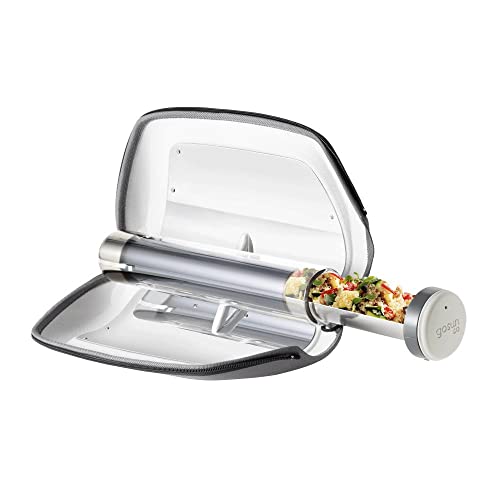
Pack a hot meal anywhere: this 2 lb solar oven hits up to 550°F and cooks in about 20 minutes—no fuel needed. If you can see a shadow, you can cook. See it in action.
Price and availability are accurate as of 10/13/2026 10:14 pm GMT and are subject to change.
If you want a truly portable solar cooker for day hikes, quick campsite lunches, or a simple backup in the RV, this is the one we reach for first. At about 2 lb with a 0.9 liter tube, it is built for single servings and fast snacks, not big family dinners. Think things like sausages, veggies, ramen, or a fillet of fish.
We picked it because it heats fast for a solar cooker and it is easy to carry. In strong sun it can hit high temps and turn out a hot meal in roughly 20 minutes without fuel, smoke, or noise. The compact form is friendly for backpacks and small RV kitchens. If you want to see how it works in practice, check the demo and details here: GoSun Go Portable Solar Oven for Camping, 0.9L Capacity.
There are trade-offs. Capacity is tight for more than one person. You need clear sun and a little attention to aim the reflectors as the sun moves. The glass tube is tough enough for normal use, but it still deserves gentle packing and storage.
Practical tip: cut food into smaller pieces for faster, more even cooking, and give the cooker a short preheat while you prep. Re-aim every 15 to 20 minutes to keep temps up. A bit of parchment makes cleanup much easier.
2. SolCook All Season Solar Cooker – Year-Round Sun-Powered Cooking & Dehydrating
Best Budget Panel Cooker
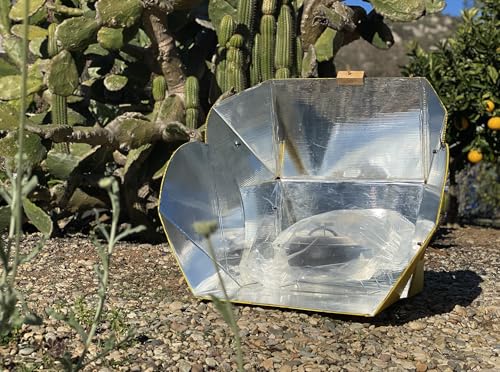
Go fuel-free: this compact, weather-tough solar cooker folds flat, cooks all day, and even dehydrates—perfect for camp, off-grid, or emergency meals.
$89.00 on Amazon
Price and availability are accurate as of 10/14/2026 03:55 am GMT and are subject to change.
If you want a low-cost way to cook quietly without fuel, this panel-style cooker fits the bill. It packs flat, rides easily in a trunk or RV bin, and sets up fast at camp or in the backyard. It shines at set-and-simmer meals like beans, rice, stews, and slow-braised meats, and it can pull double duty drying fruit or herbs on clear days. For emergency kits and off-grid cabins, it’s a simple tool that just works when the sun is out.
We picked it because the design is tough enough for regular outdoor use, yet light and compact enough to bring everywhere. The broad reflective area gives you a long cooking window, so you can start late morning and let it carry lunch into dinner without babysitting. If you’re building a basic solar-cooking kit for camping weekends, take a look at SolCook All Season Solar Cooker – Year-Round Sun-Powered Cooking & Dehydrating.
Trade-offs are straightforward. Panel cookers are slower than evacuated-tube styles and don’t deliver the crisp baking you’d get from a hot box oven. Performance tracks the weather, so expect much better results in full sun. Use a dark, lidded pot to speed things up, preheat while you prep, and resist lifting the lid. Re-aim about once an hour so the pot stays in the bright spot, and set it low and secure if it’s breezy.
3. GoSun Sport Solar Oven – fast, portable solar cooker for off‑grid camping
Best Most portable

Sun-powered cooker that packs small, stays cool to touch, and makes meals in ~20 minutes. No fuel or babysitting-just set it and chill. Perfect for camp or beach days.
$279.00 on Amazon
Price and availability are accurate as of 10/14/2026 02:33 am GMT and are subject to change.
If you want a grab-and-go solar cooker for quick camp or beach meals, this is the one that makes sense. It’s best for solo campers or pairs who want hot food without hauling fuel. RVers who like simple gear will appreciate how it stows small and stays cool on the outside, even while cooking.
We picked it because it’s actually fast in real sun. In clear conditions we’ve seen meals come together in roughly 20 minutes. There’s no flame to shield and no hot metal to worry about around kids or dogs. Aim it, load it, and let the sun work. That low-fuss routine matters when you’d rather relax than tend a stove.
There are trade-offs. Capacity is limited, so it’s not the right pick for feeding a crowd. Like any solar cooker, performance drops with clouds, shade, or low-angle sun. It also won’t brown or crisp food the way a traditional oven does.
Tip: Preheat in direct sun before loading, cut food into smaller pieces for quicker results, and re-aim as shadows shift. On trips with mixed weather, pair it with a small backup stove so you’re covered either way. For current details and availability, see GoSun Sport Solar Oven – fast, portable solar cooker for off‑grid camping.
FAQ
Setup and use
Q: How long should I preheat, and how do I aim a solar cooker?
A: Most box ovens need 20 to 45 minutes to preheat in full sun. Tube cookers often heat in 10 to 20 minutes. Aim by keeping the smallest possible shadow behind the cooker and centering the bright hotspot on the tube or window. Re-aim every 20 to 30 minutes. Use a dark, thin-walled pot and keep the glass clean for faster heat-up.
Q: Can I cook in winter or on partly cloudy days?
A: Yes, but plan on slower cook times and simpler meals. Clear cold days can still work if you shield wind, preheat longer, and use insulated models. On variable clouds, think warm-and-hold or simmering. Skip bread loaves and big roasts unless sun is steady for 2 to 3 hours.
Troubleshooting and safety
Q: My solar oven is not getting hot enough. What should I check?
A: Work through the basics:
- Time and sun angle: cook 10 a.m. to 3 p.m. with direct sun.
- Aim: tighten reflector angles and re-aim often.
- Seal: check door or tube caps for heat leaks and block wind.
- Clean: wipe reflectors and glass.
- Batch size: cook smaller portions in shallow pans.
- Elevation: use a trivet so air circulates under the pot.
Buying decisions
Q: Tube vs box vs panel vs hybrid. Which is right for me?
A: Quick guide:
- Tube cookers: fastest heat, very portable, great for 1 to 2 people. Limited pan size.
- Box ovens: best for baking and families, steady temps, slower to heat, bulkier.
- Panel cookers: cheapest and lightest, good for simmering and dehydrating, most weather sensitive.
- Hybrid (solar plus 12V/AC): ideal for RVs and off-grid homes that want backup heat when clouds roll in. Heavier and pricier.
If you want quiet, fuel-free meals, a solar cooker is one of the simplest upgrades you can make to a camp kit or off-grid setup. The tradeoff is predictable: sun in, heat out. Strong sun equals oven-like results. Weak sun means slow simmer or no-go. Pick a design that matches your weather and how you actually cook.
For speed and portability, evacuated tube cookers are hard to beat. For baking bread or feeding a crew, a box or panel oven gives you space and steady heat. If you live on the road, a hybrid that can run on 12V when clouds roll in keeps dinner on schedule without burning propane.
Our bottom line: size for your group, choose a style that fits your climate, and plan to cook around the sun window. Do that, and these cookers work far more often than you might think.
Make the right pick and get cooking
If you camp light
Solo and two-person trips are where compact tube and panel cookers shine. Think GoSun Go or a small panel like the Haines 2.0. They preheat fast, pack down small, and handle simple meals:
- Things like: oatmeal, ramen, eggs, quesadillas, sliced veggies, small fish fillets.
- Expect 20 to 40 minutes for quick items in clear mid-day sun.
- Cloud cover kills performance. Carry a cold-soak backup or a small stove if you camp in variable weather.
If you travel by RV or van
You have storage and likely park in sunny sites. A mid-size tube like GoSun Sport is a great daily driver for two to three people. If you want guaranteed dinner, a hybrid like GoSun Fusion that can run from 12V covers cloudy days without firing up propane. Tips:
- Keep the cooker where you can deploy it in 30 seconds. Roof rack, rear box, or a dedicated bay.
- Plan your big meals 10 a.m. to 3 p.m. and reheat at night on 12V if needed.
- Use a silicone mat or thin dark pans. Heavy pots slow cook times.
If you cook for a family or prep for outages
Box ovens and larger panel rigs hold Dutch ovens and full baking sheets. The All American Sun Oven or SolCook ASSC can bake bread, casseroles, or a chicken when the sun is steady.
- Expect 2 to 3 hours for roasts and bakes in clear summer sun. Longer in shoulder seasons.
- Stake or weight the reflector panels if it is breezy.
- For grill-style meals without charcoal, a high-capacity tube like GoSun Sizzle does skewers, sausages, and veggies quickly when the sun is high.
Action plan for your first week:
- Check your local sun window. You want at least 3 to 5 hours of clear mid-day sun.
- Preheat. Tubes need 5 to 15 minutes. Box ovens often need 20 to 45 minutes.
- Cook in thin, dark cookware with lids. Shiny pans reflect heat back.
- Aim carefully. Start the reflector shadow centered, then re-aim every 20 to 30 minutes.
- Use a probe thermometer. Pull poultry at 165 F and pork at 145 F with a rest.
- Start earlier than you think. Solar cooking is more slow-roast than flash-sear.
- Keep wind in mind. Shield or stake light panel cookers.
FAQ and where solar cooking fits in your power plan
FAQ
- Will it work in winter or cold weather? Cold air is fine. Sun is everything. Evacuated tubes hold heat well even in freezing temps if the sky is clear. Low winter sun and short days mean longer cook times. Plan stews and smaller cuts.
- Can I fry or sear? Not really. You will bake, roast, steam, and slow-cook. If you want a crust, finish on a skillet over a stove for a minute.
- How long do common meals take? In strong mid-day sun: sliced veggies 20 to 30 minutes in a tube, chicken thighs 45 to 75 minutes, bread 60 to 120 minutes in a box oven, dry beans 3 to 4 hours if pre-soaked. Add time for thin haze or cool ambient temps.
- What about wind and clouds? Wind cools thin panel setups. Stake them and use a windshield. Light haze can add 25 to 50 percent to cook time. Thick clouds are a no-cook day unless you have a hybrid with 12V backup.
- Is food safety a concern? Yes, just like a slow cooker. Keep the lid on, avoid opening often, and verify internal temps with a thermometer. If you cannot reach at least 145 F within two hours, move the food to another heat source.
How solar cooking pairs with generators and panels
Solar cooking is a fuel saver. Use it to shift your biggest heat loads to mid-day when your solar panels are cranking. That leaves your battery or generator for short bursts:
- Morning coffee and toast on a small inverter or propane.
- Mid-day baking, stews, and grains in the solar cooker.
- Evening reheat or quick sauté on a stove, not on battery-hungry induction if you can avoid it.
If you are building a quiet camp or cabin kit, match the cooker with a compact solar generator and folding panels for lights, phones, and a fridge. See our guides to solar power here:
- Solar generators and power stations: /solar-generators/
- Portable solar panels: /portable-solar-panels/
- Camping generator picks if you need engine backup: /best-camping-generators/
Where to go next
- If you want the simplest daily driver for two people, start with a mid-size tube cooker. Practice on potatoes, chicken thighs, and banana bread to learn your timing.
- If you bake for a family, go with a box oven and keep a cast iron Dutch oven inside it. Preheat longer and resist the urge to peek.
- If you live on the road, consider a hybrid so dinner is not tied to the forecast.
- If your weather is variable, pair a budget panel cooker with a small backup stove. That combo still cuts fuel use a lot.
Edge cases to consider:
- Coastal fog and dense smoke can reduce sun even at noon. Expect poor performance. Plan shelf-stable no-cook meals for those days.
- High winds can knock light panel rigs around. If you camp exposed, pick a heavier box oven or a sturdy tube that can be anchored.
Pick one cooker that matches your sky and your group, then give yourself two or three sunny days to dial it in. After that, it becomes routine. Quiet, no-fuel cooking that frees up your batteries and propane for when you really need them.