
Picking between the Bluetti AC180 and AC200P is really about how much power you actually use and how long you need to run it. Both are solid LiFePO4 power stations with clean AC output and decent solar support. The AC180 is the lighter, simpler choice for weekend trips and short outages. The AC200P is the bigger home-backup and RV option with more capacity and outlets.
If your list is lights, phones, a laptop, Wi‑Fi, and maybe a CPAP, the AC180 will cover you with fewer pounds to haul. If you want to keep a full‑size fridge cold through a long outage, run a small microwave occasionally, and have more ports, the AC200P makes that easier.
We focus on the stuff that matters day to day: usable watt‑hours, inverter size, surge handling for motors, charge speed from wall and solar, outlet mix, weight, and reliability. We also call out limitations. Space heaters and hair dryers pull a lot. Cold weather reduces capacity. Pick based on your real loads, not wishful thinking.
Do this first: make a short must‑run list with watts next to each device. Fridge 150 W running, 600 to 1,200 W to start. Router 10 W. CPAP 30 to 60 W. Add them up, then match capacity and inverter size to the way you live.
Quick Comparison
Quick verdict
Get AC180 if you want a lighter, lower‑cost unit for camping and short outages with fast AC charging and basic solar; get AC200P if you need more capacity and outlets for longer home backup, bigger fridges, and RV use.
How to choose between AC180 and AC200P
Start with power needs and inverter size
- Look at continuous watts for what you plan to run at the same time. The AC200P’s larger inverter gives more headroom for microwaves and power tools. The AC180 is fine for electronics, a CPAP, and small kitchen gear but will be tighter with high‑draw appliances.
- Surge matters for compressors and pumps. Fridges and well pumps can spike several times their running watts. The AC200P handles those spikes more comfortably.
Capacity and realistic runtime
- Usable watt‑hours drive how long you can run. If you want to keep a fridge cold for a full day, the AC200P’s larger battery helps a lot. The AC180 can do a fridge, but you will be recharging sooner.
- Expect about 85 to 90 percent of rated capacity in real use after inverter and conversion losses. Plan your math with that in mind.
Charging speed and solar fit
- If you want fast wall charging between uses, check AC input wattage and typical charge times. The AC180 is quick to top up for weekend plans.
- For solar, match your panel array voltage and wattage to each unit’s MPPT range and input limit. If you already own panels, make sure the open‑circuit voltage fits. Overvoltage can trip protections.
Portability and weight
- The AC180 is much easier to carry in and out of a car or up stairs. If you will move the unit often, weight matters more than you think.
- The AC200P is manageable for two hands but heavy for frequent moves. Better as a stationary home‑backup or RV unit.
Features and backup behavior
- Both use LiFePO4 cells with long cycle life and built‑in battery management. Check for UPS or pass‑through behavior if you want to keep a router or desktop running during short outages.
- Outlet mix can be the tiebreaker. The AC200P typically offers more AC sockets and DC ports, which helps when you are powering a fridge, a modem, and a couple of laptops at once.
Edge cases to consider
- High‑draw heat devices like space heaters, hair dryers, and hot plates will chew through any battery fast. Do not size your system around those unless you accept short runtimes.
- Cold weather reduces capacity. If you store or use the unit in an unheated garage, keep that in mind and plan extra capacity or faster recharge.

Ready fast: 1-hr full charge, 1152Wh LiFePO4. Power most gear with 1800W (boost to 2700W) and 11 ports. Solar-ready and UPS-quick. Curious? Take a closer look.
$499.00 on Amazon
Price and availability are accurate as of 10/14/2026 04:18 am GMT and are subject to change.
The Bluetti AC180 is the portable pick. It is lighter, simpler to move, and charges fast from a standard outlet without extra hardware. If your list is a CPAP, laptop, phones, a router, and a midsize fridge for a night, it fits well. The Bluetti app support makes it easy to check status from the couch or tent, and the basic UPS mode is handy for keeping internet gear up during short blips. If you want a well‑rounded unit for weekend camping or short winter outages, the AC180 is the right size. You can check current availability here: BLUETTI AC180 Portable Power Station – 1152Wh, 1800W AC, 0–80% in 45 min.
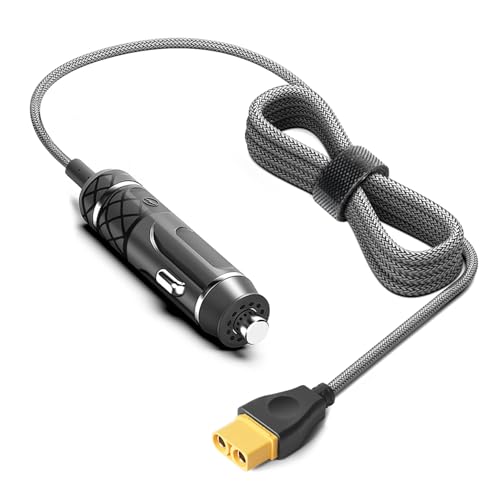
Rugged XT90 car charger: 1.5m, 16AWG, secure low‑resistance link for Bluetti/Aferiy stations and RC gear. Fast, reliable power on the go—check fit for your model.
$21.99 on Amazon
Price and availability are accurate as of 10/14/2026 11:40 am GMT and are subject to change.
[[PRODUCT_COPYSTART_2]]
FAQ
Buying decisions
Q: I just need to keep a fridge, Wi‑Fi, and phones going in an outage. Which should I buy?
A: Get the AC180. It has enough capacity and output for a cycling fridge plus small loads without the extra weight and cost. Step up to the AC200P if you want more cushion for longer outages or plan to add heavier loads like a microwave or coffee maker.
Q: Will either unit run a 13,500 BTU RV air conditioner?
A: Not well. With a soft‑start, either might spin it up for short bursts, but runtime will be poor and you risk overdraw. For regular AC use, plan on shore power, a larger modular system, or a fuel generator.
Setup and charging
Q: Which is better for solar charging, and what panels should I use?
A: The AC200P handles higher solar wattage and voltage, so it fills faster with a bigger array. The AC180 is fine with one or two portable panels for day-to-day topping up. Use MC4‑compatible panels with Bluetti’s recommended adapter cable, and stay within each unit’s input voltage and current limits.
Compatibility and edge cases
Q: Can I daisy‑chain these or use one to charge the other?
A: You can plug one unit’s AC charger into the other’s AC outlet, but it is inefficient and eats into cycle life. Neither model supports direct battery expansion. If you need a modular setup, look at Bluetti’s AC200MAX or AC300 series.
If you mostly need portable, fast-charging power for camping, vanlife, small jobs, or short outages, the Bluetti AC180 is the right size. It is lighter, easier to move, and still runs most essentials.
If you want longer runtimes for a fridge, medical devices, or to power more than one big appliance at once, the Bluetti AC200P is the safer bet. It is heavy, but the extra capacity and slightly stronger inverter matter when the lights are out for a day or two.
Both are solid picks with LFP cells, clean sine wave power, and decent apps. The choice comes down to how much you need to run at the same time and for how long. Aim low if portability is the priority. Size up if your goal is worry-free home backup.
Quick decision recap
Pick Bluetti AC180 if:
- You prioritize portability and one-person carry.
- Most loads are under 1,000 watts continuous. Think: CPAP, laptop, router, lights, a small coffee maker, or a mid-size fridge cycling.
- You want fast wall charging to top off before a trip or storm.
- Your solar array is 500 watts or less and you want a simple 1–2 panel setup.
- You are okay managing high-heat appliances one at a time and for shorter bursts.
Pick Bluetti AC200P if:
- You want more runtime for a full-size fridge plus network gear through an overnight outage.
- You plan to run multiple appliances together, or single heavier tools up to 2,000 watts.
- You can handle a two-person lift or a fixed location on a cart.
- You want a bit more solar headroom and a more versatile 30–150 V PV input range.
- You prefer not to micromanage loads during an outage.
Edge cases and caveats
- Space heaters, hair dryers, and hot plates drain any battery fast. If those are must-haves, go bigger or pair a battery with a fuel generator.
- Neither unit provides 240 V split-phase. If you need well pumps or 240 V tools, look at modular systems that support 240 V.
- Car charging is slow on both. Treat it as a last resort, not a daily plan.
- UPS mode has a transfer time. Sensitive desktops should still be on a small UPS if you cannot tolerate even a quick flicker.
- If you want real expansion with extra batteries, consider models designed for stacking rather than these stand-alone units.
Action plan and setup tips
Fast checklist to size your system
- List your must-run devices and their watts. Fridge 60–150 W running, 600–1,200 W start. Router 10–20 W. CPAP 30–60 W without heated humidifier.
- Estimate daily watt-hours: device watts × hours per day. Add them up.
- Add 20 percent buffer for inverter losses and start-up surges.
- If your total daily need is under roughly 800–900 Wh, the AC180 is plenty. Over 1,000–1,200 Wh daily or you want fewer compromises, lean AC200P.
- If you need to carry it up stairs or move it often, favor the AC180.
First-week setup
- Fully charge, then cycle to around 20–30 percent once to calibrate the battery meter.
- Update firmware in the app. Set charge limits if you plan to store it for long periods.
- Plug in your actual fridge, CPAP, and internet gear. Note runtime and inverter load on the screen so you know what to expect.
- Test UPS mode on your router and modem so you understand transfer behavior.
- If you plan to use solar, wire and test panels in good light. Confirm you are hitting expected input watts.
Accessories worth considering
- Short, heavy-gauge extension cord rated for 15 A. Keep voltage drop low.
- Simple hand cart for the AC200P if it will move around the house or garage.
- Parallel DC disconnects and proper MC4 branch connectors if you will reconfigure solar seasonally.
- A small 300–600 W pure sine backup inverter for your desktop if you are picky about transfer time.
- Weather cover or dry box if you will stage the unit on a porch during storms.
Final word on trade-offs
- AC180: better mobility and faster top-offs. Ideal for weekenders and light emergency coverage.
- AC200P: more cushion for real outages and higher combined loads. Better for families and longer trips off-grid.
If you are torn, think about what happens at 2 a.m. during a winter outage. If the goal is to sleep through the night with the fridge cold, the AC200P’s extra watt-hours buy peace of mind. If you only need to keep phones charged, run a CPAP, and make coffee in the morning, the AC180 keeps life simple and your back happy.